
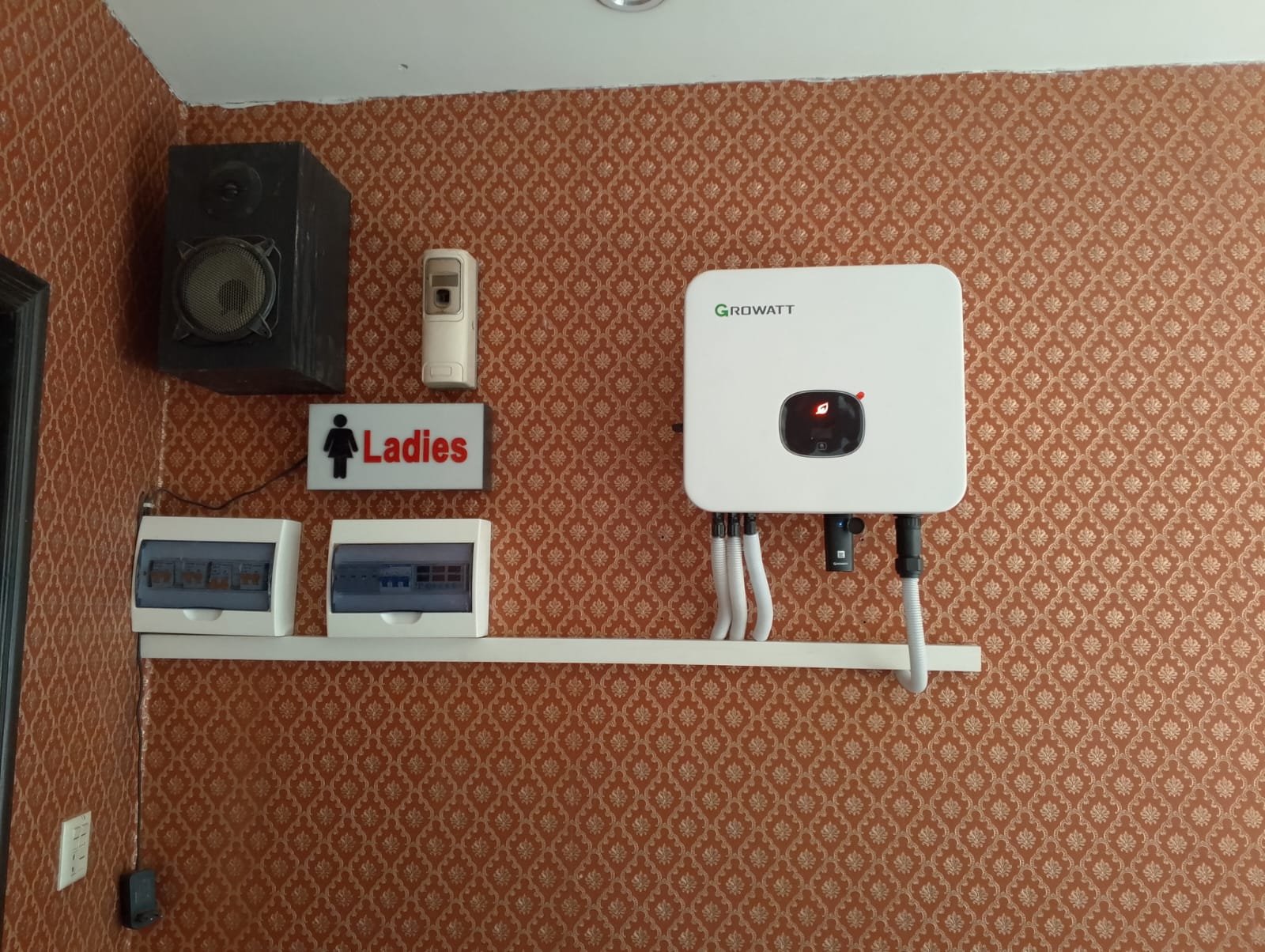
10 kW on-grid system in a Banquet in Johar Town, Lahore. SNM Solutions recently completed a 10kW Commercial On Grid Solar System installation at a banquet in Johar Town, Lahore. Banquets use a considerable amount of electricity for air conditioning, lighting, kitchen equipment, refrigeration, and other daily operations. The business wanted a practical way to reduce these ongoing electricity expenses and make better use of its available rooftop space.
What we installed
- 10kW Growatt On Grid Inverter
- 715W SNM High Efficiency Solar Panels
- Premium Standard Mounting Structure
Performance
- 40+ Units Per Day
- 1,200+ Units Per Month
- 15,000+ Units Per Year
Figures are the system’s design output as recorded at commissioning; actual production varies with season and shading.
What this means under 2026 net billing
A business that runs during the day consumes most of what the roof produces as it is generated, so the value of this system comes from self-consumption at the full tariff rather than from exports. That is why the February 2026 move from net metering to net billing, which cut the export rate to about Rs 11 per unit, barely changes the return on a well-sized commercial or industrial system. Read our guide to net metering versus net billing in Pakistan.
Location
This installation is in a Banquet in Johar Town, Lahore. See our Johar Town page for more local projects and typical system sizes, or check the 10 kW system price at SNM’s published rates. For businesses, see our commercial solar and industrial solar pages.
Planning something similar?
Call or WhatsApp 0321 878 3630 for a free site survey and an itemised quote. All system prices · Solar prices in Lahore
What this system generates, and what that is actually worth
The design output is 40+ units a day, or about 1200 units a month. What those units are worth depends almost entirely on when they get used, and since 9 February 2026 that gap is wide.
A unit consumed in the house replaces one bought from LESCO at roughly Rs 55. A unit exported earns about Rs 11 under net billing. So a self-consumed unit is worth around five times an exported one, and the same 1200 units can be worth very different amounts:
| How the 1200 units are used | Value per month |
|---|---|
| Everything used in the house as generated | Rs 66,000 |
| 70% self-consumed (loads shifted to daytime, or battery) | Rs 50,000 |
| 40% self-consumed (typical home, nobody in during the day) | Rs 34,000 |
That is a Rs 32,000 a month difference on the same hardware and the same roof. Running the washing machine, water pump, iron and air conditioning during daylight is not a minor optimisation under net billing. It is most of the return.
Figures are the system’s design output at a Rs 55 self-consumption tariff and the Rs 11 export rate. Actual generation varies with season, shading and dust, and your own tariff depends on your slab.
For how event timing changes the return for a hall or banquet, see our guide to solar for marriage halls and banquets.