
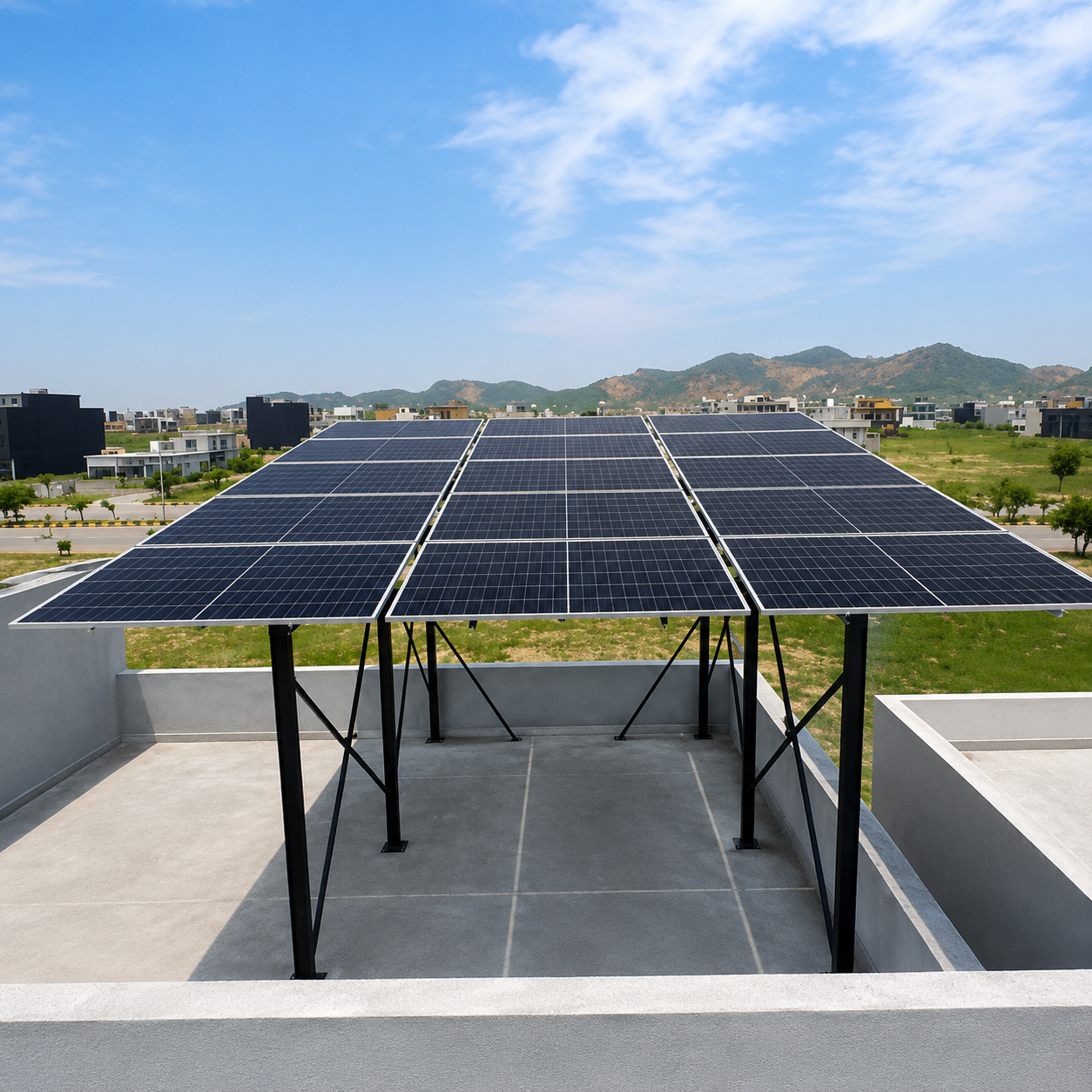
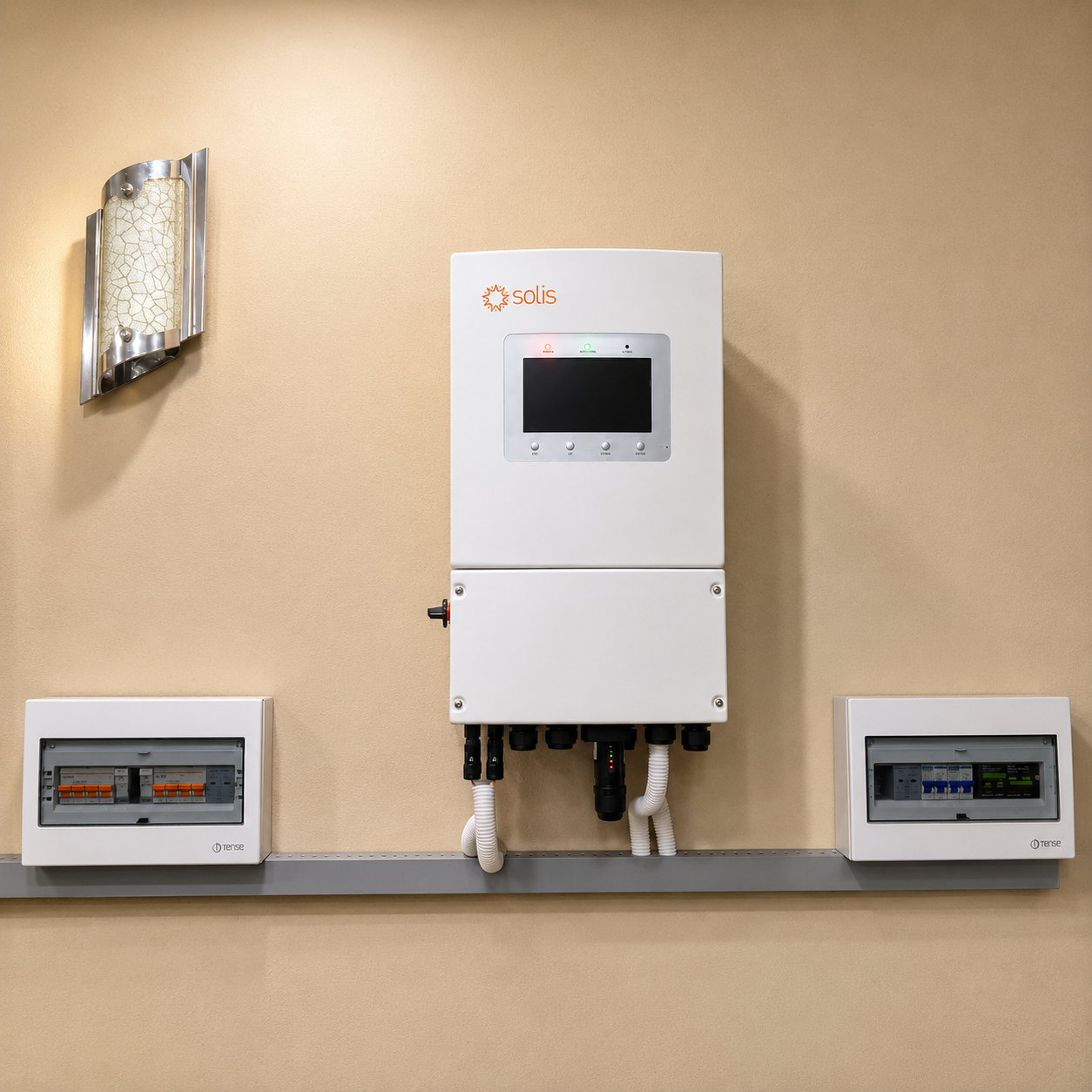
10 kW hybrid system in DHA, Islamabad. SNM Solutions proudly completed the successful installation of a 10kW Solis Hybrid Solar System for a residential client in DHA, Islamabad. This advanced solar energy solution was designed to reduce electricity costs, maximize solar power generation, and provide a future-ready system that supports battery backup integration whenever required.
What we installed
- 10kW Solis Hybrid Solar Inverter
- 715W SNM High-Efficiency Solar Panels
- Premium Guarder-Type Elevated Mounting Structure
- Complete Electrical Protection & Smart Monitoring System
- Future-ready design with battery backup compatibility
- Smart monitoring for improved energy management
Performance
- 40+ Units Per Day
- 1,200+ Units Per Month
- 15,000+ Units Per Year
Figures are the system’s design output as recorded at commissioning; actual production varies with season and shading.
What this means under 2026 net billing
The battery is what makes this design hold up under net billing, in force for new connections since 9 February 2026: daytime surplus is stored and used in the evening at the full tariff of roughly Rs 55 to 65, instead of being exported at about Rs 11. Backup through load-shedding is the reason most homes buy the battery, so it sits outside the solar payback, which at our current rates is 2 to 3 years. Connections approved under net metering before that date keep their original terms. Read our guide to net metering versus net billing in Pakistan.
Location
This installation is in DHA, Islamabad. SNM installs across Pakistan; see system prices by size, or check the 10 kW system price at SNM’s published rates.
Planning something similar?
Call or WhatsApp 0321 878 3630 for a free site survey and an itemised quote. All system prices · Solar prices in Lahore
What this system generates, and what that is actually worth
The design output is 40+ units a day, or about 1200 units a month. What those units are worth depends almost entirely on when they get used, and since 9 February 2026 that gap is wide.
A unit consumed in the house replaces one bought from LESCO at roughly Rs 55. A unit exported earns about Rs 11 under net billing. So a self-consumed unit is worth around five times an exported one, and the same 1200 units can be worth very different amounts:
| How the 1200 units are used | Value per month |
|---|---|
| Everything used in the house as generated | Rs 66,000 |
| 70% self-consumed (loads shifted to daytime, or battery) | Rs 50,000 |
| 40% self-consumed (typical home, nobody in during the day) | Rs 34,000 |
That is a Rs 32,000 a month difference on the same hardware and the same roof. Running the washing machine, water pump, iron and air conditioning during daylight is not a minor optimisation under net billing. It is most of the return.
Figures are the system’s design output at a Rs 55 self-consumption tariff and the Rs 11 export rate. Actual generation varies with season, shading and dust, and your own tariff depends on your slab.