
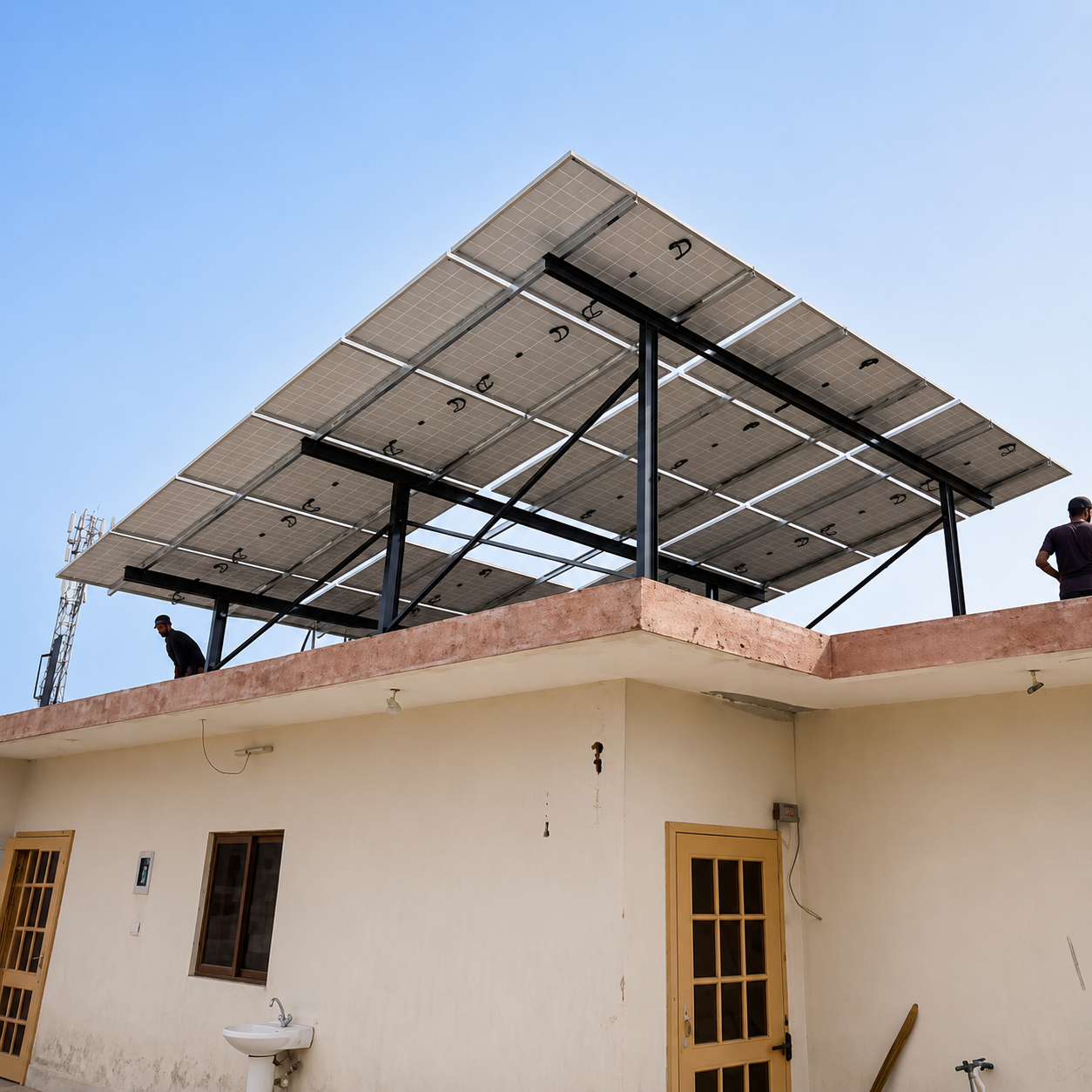
A tubewell is close to the ideal solar load: it runs during daylight, it does not need a battery, and the diesel or grid electricity it replaces is expensive. For many Pakistani farms it is the strongest financial case for solar on the property.
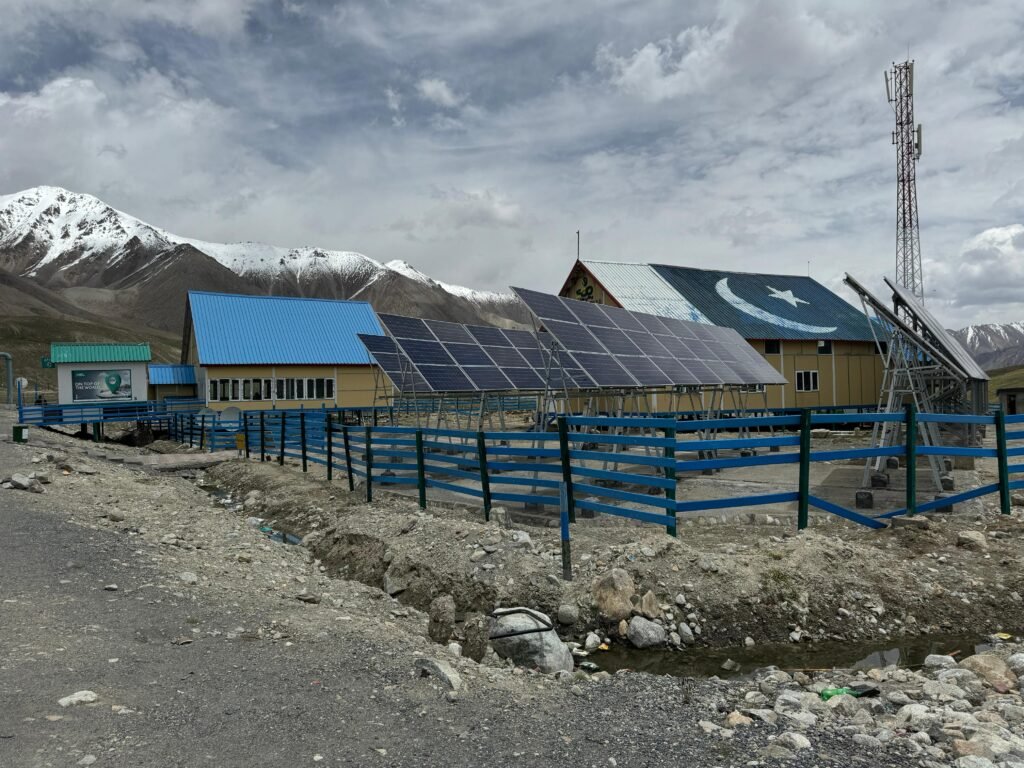
Why tubewells suit solar so well
- The load matches the supply. You irrigate during the day; panels generate during the day. No storage required.
- No battery means no replacement cycle. The most expensive and shortest-lived part of a hybrid system is simply absent.
- It replaces expensive energy. Diesel pumping and agricultural grid tariffs are both costly, so displaced units are worth a great deal.
- Simple maintenance. Panels, a controller or inverter, and the existing pump.
Sizing to the pump
The system is sized to the pump’s rated power, plus headroom for starting current, which is higher than the running draw.
| Pump | Running draw (approx) | Typical system | Installed price |
|---|---|---|---|
| 5 hp | ~3.7 kW | 5 to 6 kW | Rs 450,000 to 500,000 |
| 10 hp | ~7.5 kW | 10 to 12 kW | Rs 850,000 to 1,000,000 |
| 15 hp | ~11 kW | 15 kW | Rs 1,200,000 |
| 25 hp | ~18.5 kW | 20 to 25 kW | Rs 1,600,000 to 2,000,000 |
At SNM’s published on-grid rate of approx Rs 80,000 to Rs 100,000 per kW installed. The pump, controller and any civil work are specified per site.
Our irrigation installations
SNM has installed solar water-pumping systems including a 21 kW system at Barki, Lahore and a 10 kW system in Mardan, KPK. Agricultural sites bring their own conditions: dust, distance from the array to the pump, and mounting on open ground rather than a roof.
What to plan for honestly
- Fewer pumping hours in winter. Output falls in December and January. Irrigation demand usually falls too, but plan around it rather than being surprised.
- Dust. Agricultural sites soil panels faster than rooftops. Cleaning matters more here; see our cleaning guide.
- Cable distance. A long run from array to pump costs efficiency and money. Placing the array near the pump is worth some inconvenience.
- Security. Panels on open land need mounting and siting that accounts for that.
Frequently asked questions
How much does a solar tubewell system cost in Pakistan?
It depends on the pump. A typical agricultural tubewell needs 10 to 25 kW of panels, which at SNM’s rate of approx Rs 80,000 to Rs 100,000 per kW is roughly Rs 850,000 to Rs 1,750,000 installed. The pump and controller specification drives the final figure.
Can solar run a tubewell without batteries?
Yes, and for irrigation that is usually the right design. The pump runs while the sun is up, which is when you want to irrigate anyway. Avoiding a battery bank removes the single most expensive and shortest-lived component.
What size solar system does my tubewell need?
Match it to the pump’s rated power plus headroom for starting current. A 10 hp pump draws roughly 7.5 kW while running but needs more at startup, so a system in the 10 to 12 kW range is typical.
Will a solar tubewell work in winter and cloudy weather?
It runs for fewer hours and at reduced output. Irrigation demand is also lower in winter, so the two broadly move together, but plan for reduced pumping hours in December and January.
Has SNM installed solar tubewells?
Yes, including a 21 kW water irrigation system at Barki, Lahore and a 10 kW system in Mardan, KPK.
See our agricultural solar page or system prices by size.
Have a tubewell to convert?
Tell us the pump size in horsepower and where it sits relative to open ground, on WhatsApp 0321 878 3630. We will size the array and quote it itemised.