
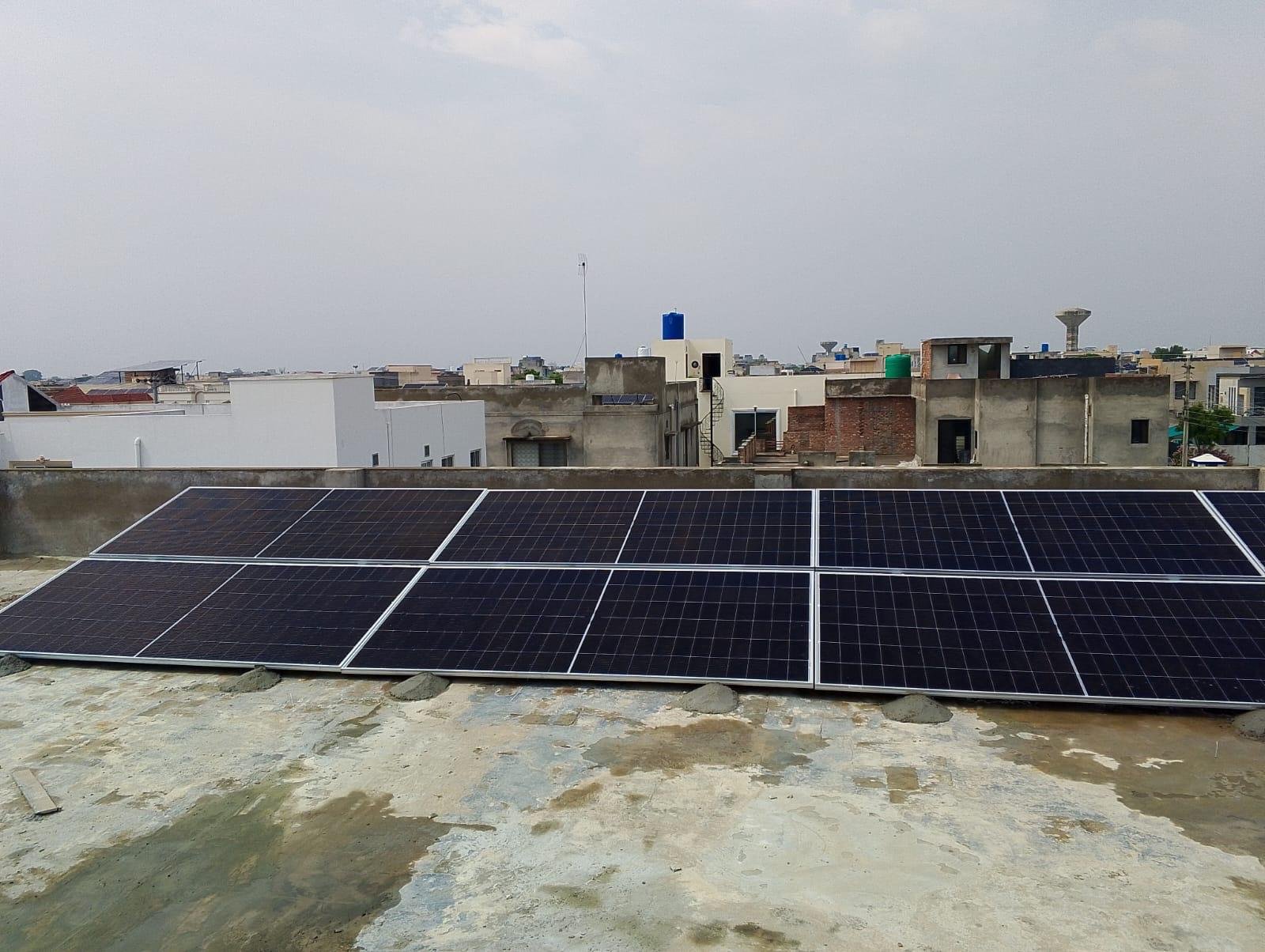
By Asif Niaz Meo, Managing Director, SNM Solutions · Updated September 2026
On-grid vs hybrid solar system: the short version
Since 9 February 2026, a unit you export earns about Rs 11, but a unit you use yourself still saves roughly Rs 55–65. Your panels produce most at midday, and most homes use most in the evening. A hybrid system with a lithium battery moves that midday surplus to the evening, which is why, for a family that is out during the day, it now earns noticeably more each month than on-grid on the same roof — and it keeps the lights and fans on during load-shedding. On-grid still wins where people are home, or the business is open, while the sun is up.
Why this decision changed in 2026
Under net metering, the grid acted like a free battery. A unit you exported at noon cancelled a unit you imported at night, one for one, so it hardly mattered when you used your solar. On-grid was the obvious choice, and a battery was only about backup.
Net billing prices the two directions separately. You sell surplus to your DISCO at about Rs 11 per unit and buy what you import at your normal tariff. Timing now decides your return. For the full regulatory picture — the five-year agreement, the licence fee of about Rs 1,000 per kW and who is grandfathered — see our guide to the 2026 net billing rules.
A unit in your battery is worth five times a unit you export
Take one unit your panels generate at 1pm, when nobody is home. On an on-grid system it goes to the grid and earns about Rs 11. On a hybrid system it charges the lithium battery, and at 8pm it runs your fans, lights or an inverter AC instead of a unit you would have bought at Rs 55–65.
Same sunlight, same panels. The difference is roughly Rs 45–55 on every unit the battery moves from afternoon to evening. Multiply that by the eight or nine units a 10 kWh battery moves each day, every day, and it stops being a detail. Every unit you stop buying also carries the grid’s fixed costs with it, which we explain in IPP capacity payments in Pakistan.
On-grid vs hybrid solar system, side by side
| On-grid | Hybrid + lithium | |
|---|---|---|
| 10 kW installed (approx) | Rs 850,000 | Rs 1,500,000 (5 kWh) / Rs 1,700,000 (10 kWh) |
| Midday surplus | Exported at about Rs 11 | Stored, used in the evening at Rs 55–65 value |
| During load-shedding | Shuts down with the grid, for safety | Keeps backed-up loads running |
| Low or unstable voltage | No backup | Battery and inverter carry the house through it |
| Payback on the solar | 2 to 3 years | 2 to 3 years (battery counted separately — see below) |
| Best for | Daytime users: offices, shops, homes occupied all day | Evening users, families out by day, areas with outages |
Prices are approximate, installed, and exclude WAPDA / LESCO net-billing charges. Hybrid solar system pricing runs about Rs 135,000 to Rs 170,000 per kW depending on size and battery. Full table: solar system prices for every size.
The same 10 kW roof, two designs
These are the same illustrative assumptions as our net billing guide, so the numbers on this site agree. A 10 kW solar system in Lahore produces around 40 units a day across the year. We use a conservative Rs 50 per unit all-in tariff, and a family that is out during the day. The hybrid design uses a 10 kWh lithium bank (approx Rs 1,700,000 for the whole system), which gives about 9 units of usable storage a day once depth of discharge and charging losses are allowed for.
| Design | What happens to the 40 units | Monthly saving |
|---|---|---|
| On-grid | 12 used directly, 28 exported at Rs 11 | About Rs 27,000 |
| Hybrid + lithium | Battery shifts about 9 units to the evening, so 21 are used and 19 exported | About Rs 38,000 |
The battery is worth about Rs 10,500 a month here, roughly Rs 125,000 a year, on top of the backup it provides. That is the net billing case for storage in one line.
How we count payback, stated openly. Both designs return the cost of the solar in about 2 to 3 years. We leave the battery out of that figure because in Pakistan most families buy a battery for load-shedding and voltage protection whether or not they install solar, so it is a separate purchase rather than part of the solar investment. If you would not otherwise have bought a battery, add its cost back in and your hybrid payback will be longer. We would rather you knew that than find it later.
Choose a hybrid solar system with lithium if…
- The house is mostly empty from 9 to 5 and comes alive in the evening. This is exactly the pattern net billing punishes on on-grid.
- Your big loads run after sunset: inverter ACs in summer nights, water pumps, cooking, lights.
- Load-shedding or low voltage is a problem in your area. If you rely on a generator today, compare solar vs generator first. A hybrid system can replace a separate UPS and gives your appliances a steadier supply.
- You are applying for net billing now, so every export you make will be paid at Rs 11.
Stay with an on-grid solar system if…
- You use most of your power in daylight — an office, clinic, shop or school, or a home where someone is in with the AC on all day. You consume the midday units directly, so there is little for a battery to move.
- Budget is the first constraint. An on-grid solar system costs far less up front and still pays back fast. If you think you may want storage later, ask for a hybrid-ready inverter now.
- Outages are rare where you are and backup is not a priority.
Not sure which pattern you are? Your last twelve bills and a short site survey answer it. Or run your bill through the solar system calculator first.
Already on net metering? Read this before adding a battery
If your net-metering agreement was valid on 9 February 2026, it continues on the old terms until it expires, and your exports still offset imports one for one. That changes the battery maths for you: storage is worth much less to a protected customer, so buy it for backup, not for savings.
Protect the agreement while you do it. SRO 547(I)/2026 ends grandfathering on a “material modification” that changes the system’s maximum electrical output. In practice:
- Do not add panels or fit a larger inverter on a protected system without advice. The whole installation, not just the added part, can move to net billing.
- Be careful with a load extension or a change of name on the connection. In our experience with LESCO, these can also move the connection onto net billing and the new rate.
- A battery that does not change maximum output is a different case, but the rule is applied by LESCO. Get their confirmation in writing before you install storage.
The detail is in how you lose the old net-metering rate, and how to grow without losing it.
Sizing the lithium bank to your evening
Size the battery to the evening, not to the roof. Each kWh of usable lithium capacity moves roughly one unit a day from export to self-use. A family that uses 8 or 9 units between sunset and midnight gets most of the benefit from a 10 kWh bank; a smaller evening load is well served by 5 kWh. Going bigger than your evening use adds cost without adding savings.
Lithium (LiFePO4) costs roughly Rs 40,000 to Rs 55,000 per kWh in Pakistan right now, depending on brand and size. See current lithium battery prices, the battery sizing guide, and why we recommend lithium over tubular for a system that cycles every day.
Hybrid solar systems with lithium we have installed in Lahore
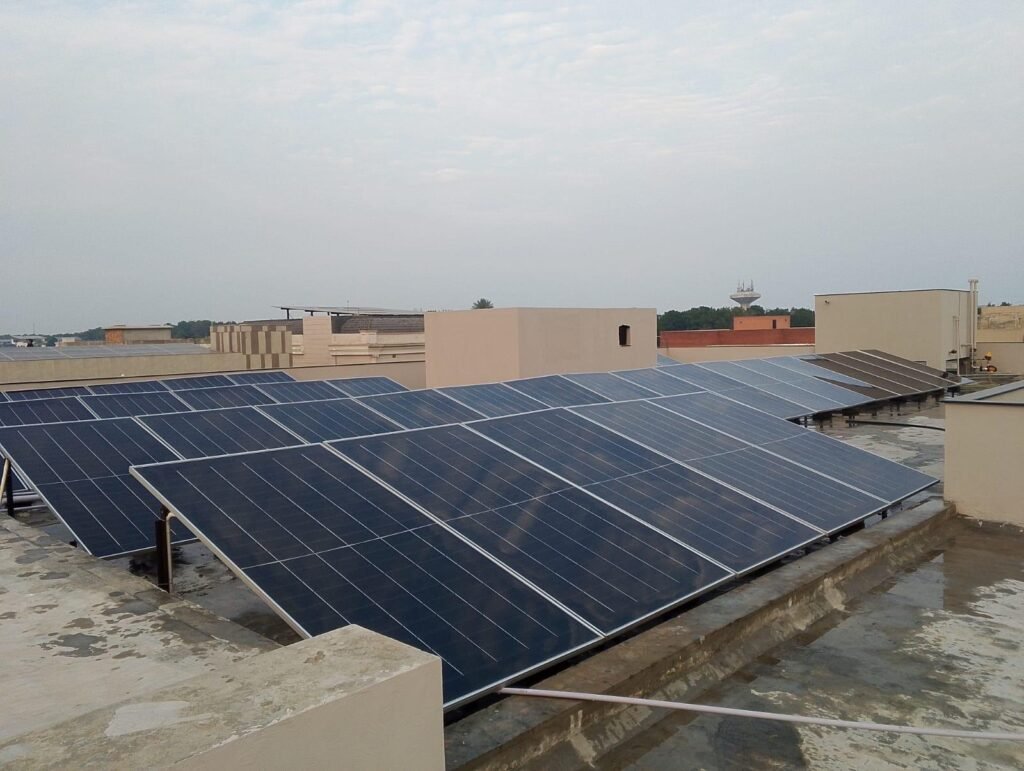
- 6 kW hybrid, Model Town — 6 kW hybrid inverter with a 5 kWh Hisel lithium battery.
- 8 kW hybrid, Wapda Town — Solis hybrid inverter with a 5 kWh Dyness lithium battery.
- 12 kW hybrid, Wapda Town — two 5 kWh BYD lithium batteries, 10 kWh in total.
More reasoning on storage itself is in why lithium batteries now pay for themselves.
Frequently asked questions
Which is better, on-grid or hybrid solar, under net billing?
For homes that use most of their electricity in the evening, yes. A lithium battery stores midday surplus that would otherwise be exported at about Rs 11 and uses it when grid power costs Rs 55–65. For daytime users such as offices and shops, on-grid usually remains the better value.
How much more does a hybrid solar system cost than on-grid?
A 10 kW on-grid system is approx Rs 850,000 installed, and a 10 kW hybrid is approx Rs 1,500,000 with a 5 kWh lithium battery or Rs 1,700,000 with 10 kWh. Prices exclude WAPDA / LESCO net-billing charges.
What is the payback of a hybrid solar system in 2026?
About 2 to 3 years for the solar, the same as on-grid, when the battery is counted as a separate purchase for load-shedding backup. If you would not otherwise buy a battery, including its cost makes the payback longer.
Can I add a lithium battery to my existing on-grid system?
Often, but it usually means adding or replacing the inverter with a hybrid-capable one, which a site survey confirms. If you are on a protected net-metering agreement, get LESCO’s written confirmation first so the change does not move you to net billing.
Does a hybrid system work during load-shedding?
Yes. When the grid goes down, an on-grid system switches off for safety, while a hybrid system keeps your backed-up loads running from the battery and the panels.
What is the difference between an on-grid and a hybrid inverter?
An on-grid inverter sends solar power to your home and exports the surplus, and it switches off when the grid goes down, for safety. A hybrid inverter also charges and discharges a battery, so it can store midday surplus for the evening and keep backed-up loads running during load-shedding.
What size lithium battery do I need with a 10 kW system?
Size it to your evening use. Around 5 kWh suits a light evening load, and 10 kWh covers a family that uses about 8 or 9 units after sunset.
Roman Urdu mein aam sawalat
Net billing mein hybrid behtar hai ya on-grid?
Agar ghar mein bijli zyada sham ko use hoti hai to hybrid behtar hai. Din ki zaid bijli grid ko Rs 11 mein bechne ki bajaye lithium battery mein store hoti hai aur raat ko Rs 55 se 65 wali bijli bachati hai. Office aur dukaan ke liye on-grid aam tor par behtar rehta hai.
Lithium battery wala hybrid system kitne mein lagta hai?
10 kW on-grid taqreeban Rs 850,000 aur 10 kW hybrid 5 kWh battery ke sath taqreeban Rs 1,500,000 ya 10 kWh ke sath Rs 1,700,000 mein lagta hai. In mein WAPDA / LESCO net billing charges shamil nahi.
Mere paas purana net metering hai, kya battery laga sakta hoon?
Laga sakte hain, lekin panel ya bara inverter na barhayein, aur load extension ya naam tabdeel karwane se pehle mashwara karein, warna pura connection net billing par ja sakta hai. Battery lagane se pehle LESCO se likhit tasdeeq le lein.
On-grid or hybrid? Let us look at your bills.
Send us your last few electricity bills and we will show you both designs for your roof, with the monthly saving for each. Free site survey in Lahore.